

After receiving a dental implant, the most frequent question is always the same: what happens now?
Dental implant healing is a precise journey, made of well-defined stages, that leads the bone to integrate stably with the new artificial root.
Knowing what to expect, step by step, helps you go through this phase with peace of mind and do your part for a long-lasting result. Let’s see together how it works and what you can do to promote it.
Osseointegration: the heart of dental implant healing
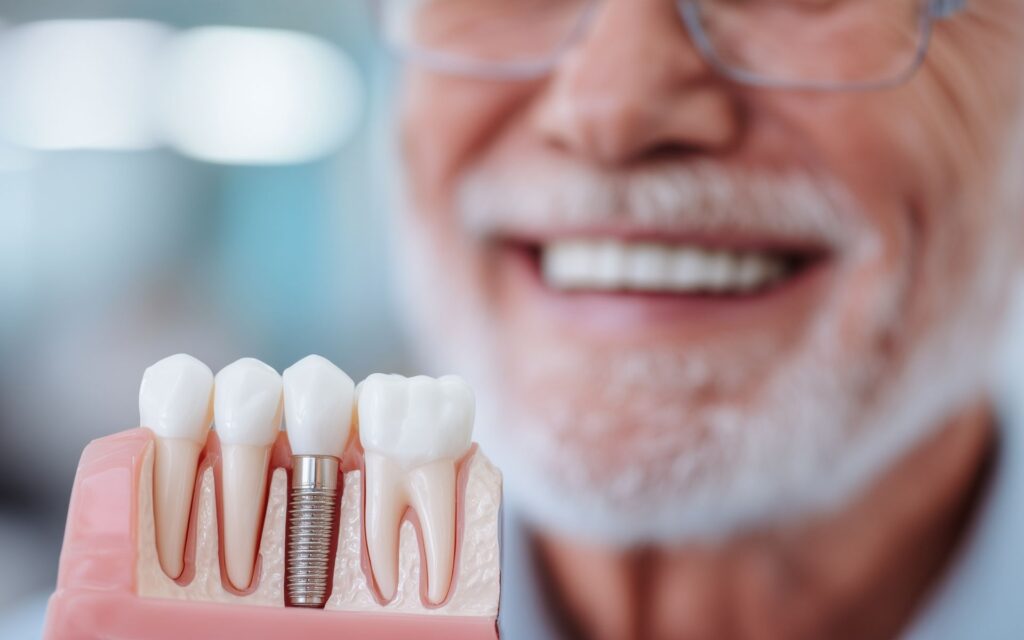
The true protagonist of healing is a biological process called osseointegration. In practice, bone cells grow by adhering to the titanium surface of the implant, until they fuse with it and lock it firmly in place.
It is this bond that makes the implant stable and capable of lasting over time. Times vary from person to person, but generally speaking, osseointegration takes three to six months: it tends to be faster in the lower jaw, where the bone is denser, and a bit slower in the upper jaw.
The stages of dental implant healing, step by step
Healing is not a single moment, but a gradual journey. Knowing the stages helps to distinguish what is normal from what deserves attention.
The first few days: swelling and minor discomfort
In the first 48-72 hours, swelling, mild pain, and sometimes a small bruise may appear. These are completely normal reactions, which are easily managed with the medications indicated by your dentist and with a few precautions, such as applying cold packs. The discomfort peaks in the first few days and then progressively decreases.

The first few weeks: the gum stabilizes
In the following weeks, the gum tissues heal and adapt around the implant. This is the phase where, if present, sutures are removed and the area begins to take on a healthier and more stable appearance.
The following months: the bone integrates
This is the longest and, paradoxically, the quietest phase: on the outside everything seems still, but the actual integration takes place in the bone. Only at the end of this period, once stability is verified, do we proceed with the permanent prosthesis.
How to promote dental implant healing
Your behavior in the weeks after surgery greatly affects the result. Here are the behaviors that really make a difference:
- take care of oral hygiene gently but consistently, following the instructions received;
- avoid smoking: it is one of the main enemies of osseointegration and slows down healing;
- prefer a soft diet in the first few days, avoiding hard, very hot, or crunchy foods on the treated side;
- do not disturb the area with your tongue or fingers and do not chew directly on the implant until instructed;
- follow the medication, timing, and check-ups scheduled with your specialist.
If you live with general conditions such as diabetes, it is important to keep them under control together with your doctor: they affect the timing and quality of healing.
When to contact the dentist: signs not to ignore
In the vast majority of cases, healing proceeds smoothly. It is still useful to know when it is best to get in touch. Contact your dentist if you notice:
- intense pain that persists or increases beyond the first few days;
- swelling that grows instead of reducing;
- a sensation of implant mobility;
- discharge, bad taste, or fever.
It’s not about being alarmed, but about intervening in time. A timely check-up almost always allows for an easy resolution of what could become complicated if neglected.
Why trust Resta in Italia for long-lasting dental implants
Healing doesn’t end when you leave the clinic: it is precisely in the following months that you need a nearby point of reference. Staying in Italy means having a team that follows you in every phase, with scheduled check-ups and the possibility of intervening immediately, without travel and without waiting.
Do you have an implant in the healing phase and want to be followed carefully?