

Understanding the differences between ceramic and zirconia crowns helps you navigate aesthetics, strength, and long-term durability, allowing you to make an informed choice together with your dentist.
Let’s find out more.
Ceramic and zirconia: what they are and why they are ideal for crowns
In common parlance, “ceramic” and “zirconia” are often used interchangeably, but in dentistry, they have very specific and distinct roles.
- The dental ceramic is a glass-like material capable of faithfully reproducing the transparency and brightness of natural enamel.
- Zirconia (zirconium oxide) is a high-performance “technical ceramic“: extremely strong and biocompatible, it is ideal for supporting chewing loads.
It is also important to distinguish between the components:
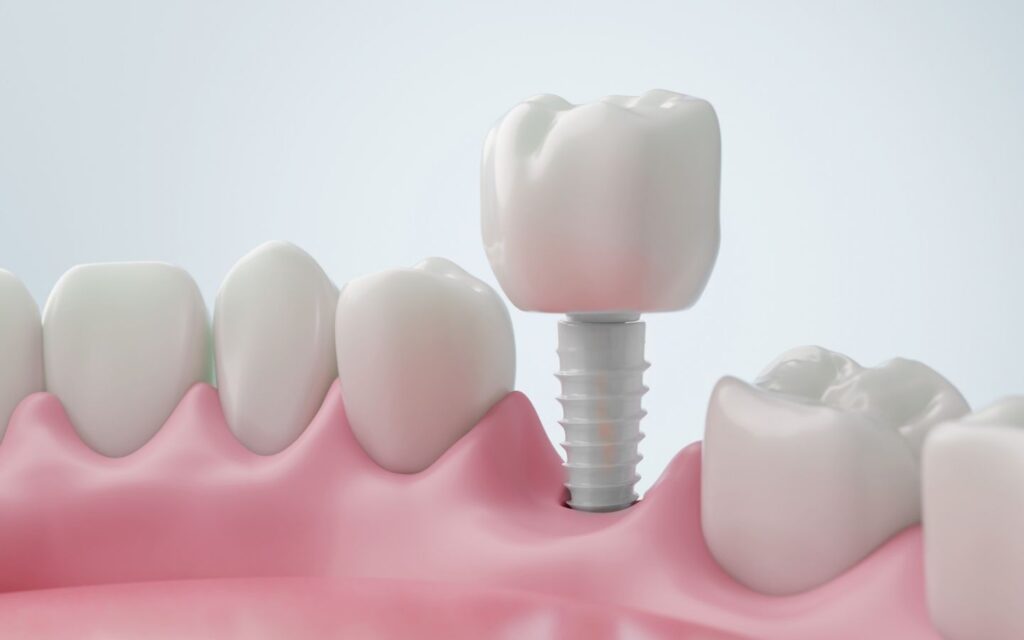
- the dental implant (the screw inserted into the bone) is in most cases made of titanium, but it can also be made of zirconia
- the crown (the visible part) can be made of various materials, including ceramic, zirconia, or a combination of the two
The most advanced solutions arise from this combination: a zirconia structure for solidity, coated in ceramic for a natural aesthetic result.
PFM (porcelain-fused-to-metal) or metal-free crowns: what are the differences
When talking about crowns, one of the most important distinctions concerns the presence or absence of a metal substructure. Understanding this difference helps you see why “metal-free” solutions are becoming increasingly popular today.
The PFM (porcelain-fused-to-metal) crown
A PFM crown consists of an internal metal alloy structure, externally coated with a layer of ceramic. It is a solution proven for decades, valued for its robustness and excellent strength-to-cost ratio.
However, it has some limitations, especially regarding aesthetics:
- the metal structure blocks light, giving the crown a more opaque and less natural appearance compared to the adjacent tooth;
- with physiological gum recession, a thin gray or dark line may appear at the tooth neck, caused by the underlying metal;
- in specific cases, some people may show sensitivity to certain metal alloys.
The metal-free crown (all-ceramic and zirconia)
Metal-free crowns, as the name suggests, do not contain any metal. This category includes both all-ceramics (glass-like materials such as lithium disilicate, ideal for maximum translucency) and zirconia crowns, chosen when greater strength is needed.
The main advantages are:
- a more natural aesthetic, because light passes through the crown just as it would through a real tooth;
- the absence of a dark line at the gumline, even in cases of thin gums or slight recession;
- high biocompatibility, which is particularly useful for those with sensitivities to certain metals.
In summary: PFM remains a reliable and resistant solution, while metal-free options (ceramic and zirconia) offer a superior aesthetic result and better integration with gum tissue. The best choice always depends on the clinical situation and the individual patient’s goals, to be evaluated together with your dentist.
Aesthetics and durability: the advantages of zirconia and ceramic dental crowns
Why choose these materials over traditional solutions?
The advantages concern both aesthetics and long-term performance.
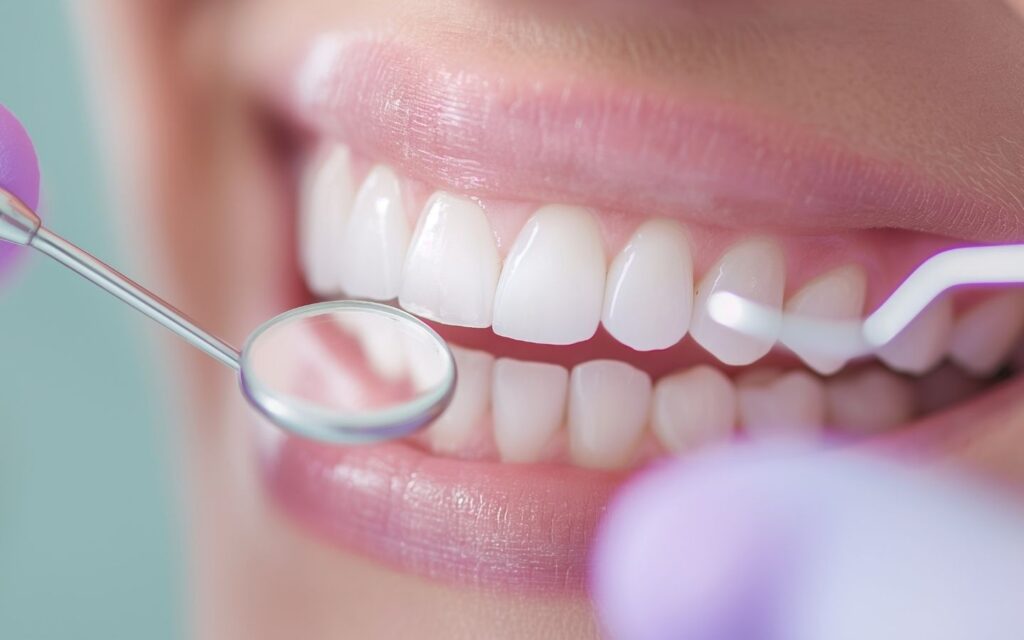
Natural aesthetic results
Ceramic and zirconia dental crowns are free of visible metal. This means that:
- light passes through the tooth just as it would with a natural tooth
- unsightly “black edges” near the gum, often seen in the past, are avoided
- zirconia, being white, is perfect for those with very thin gums.
For this reason, these solutions are particularly recommended for the anterior sectors, where aesthetic impact is crucial.
Strength and longevity: a choice that lasts over time
From a mechanical point of view, both materials offer excellent performance.
- Modern ceramics guarantee good resistance and excellent color stability over time, especially when supported by appropriate structures.
- Zirconia stands out for its high resistance to chewing loads and is also indicated for extensive rehabilitations.
When to choose ceramic or zirconia for a dental crown
The choice of material primarily concerns the crown, which is the visible tooth.
In these cases, it is important to evaluate several aspects, not only aesthetic but also functional.
- ceramic crowns are the ideal solution when the goal is the maximum aesthetic result. Thanks to their translucency, they integrate perfectly in the anterior sectors.
- zirconia crowns: these are preferred when greater strength is required. They are particularly indicated for posterior sectors or in the presence of high chewing loads.
- today, combined solutions (zirconia + ceramic) are also very common in clinical practice, allowing for the combination of structural solidity and natural aesthetics.
How to choose the most suitable type of crown: factors to consider
It is never a standard choice. The decision between a ceramic or zirconia crown, compared for example to composite or resin, depends on a personalized assessment that takes several factors into account:
- tooth position (aesthetic or chewing zone)
- bone quality and quantity
- type of implant used
- patient habits, such as bruxism or diet
Even less obvious aspects, such as gum thickness or the smile line, can influence the final decision.
The goal remains to find the balance between aesthetics, function, and long-term durability.
Resta in Italia: certified materials and tailored solutions
At Resta in Italia centers, the choice between ceramic dental implants, zirconia dental implants, or other solutions does not follow “trends,” but precise clinical criteria.
Every treatment starts with accurate digital planning and a three-dimensional diagnosis to identify the most suitable solution for the individual patient.
Staying in Italy for your implant means relying on certified materials, advanced technologies, and a team that accompanies you through all stages of the journey.
To get you back to smiling and enjoying every bite naturally, forgetting you even have an implant!
Unsure whether to choose a ceramic or zirconia dental implant?