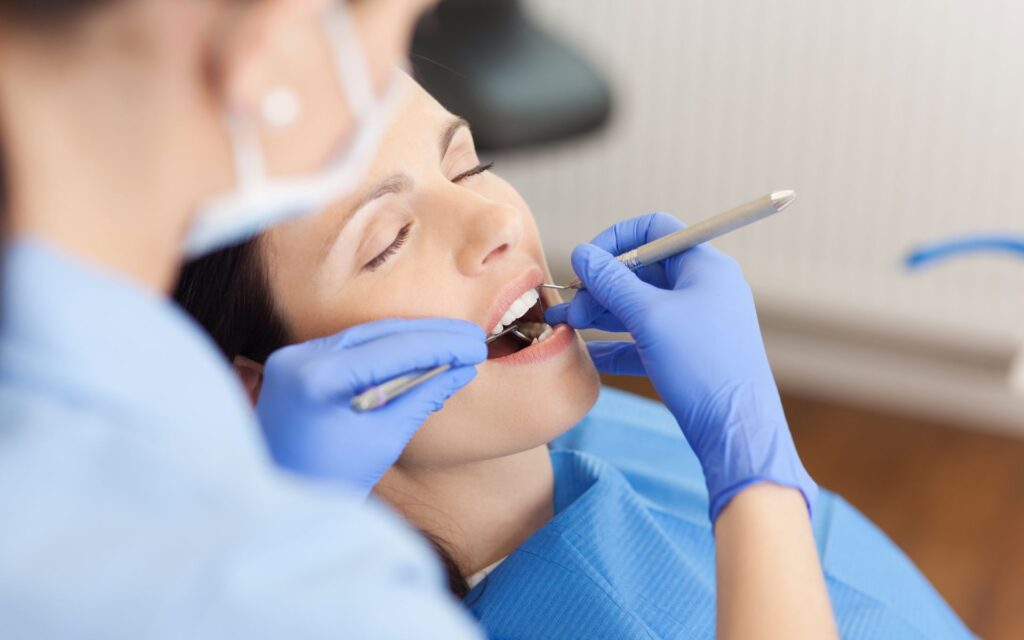


Let’s be honest: almost no one jumps for joy at the thought of sitting in the dentist’s chair. For many, however, that slight discomfort turns into a real barrier. They procrastinate, they wait, and in the meantime, manageable problems become more complex procedures.
Anxiolysis in dentistry was created exactly for this: it is not a “magic wand” that puts you to sleep for hours, but a light support that reduces anxiety and allows you to face the session with clarity, without that physical and mental tension that makes everything more difficult.
What is anxiolysis in dentistry and how it works
Anxiolysis is a medical technique that uses medications (such as benzodiazepines) or gas mixtures to reduce anxiety, fear, and tension during treatment.
The goal is not to put you to sleep, but to bring you into a state of relaxation, an “alert calm” where you remain present and cooperative.
In practice:
- you stay awake and able to interact with the dentist
- you keep all natural reflexes active, such as breathing and swallowing
- you perceive less stress, noise, and session duration
The difference compared to deeper anesthetic techniques is clear: anxiolysis reduces anxiety and tension without loss of consciousness. Deeper sedation, on the other hand, leads to a much more marked state of relaxation, up to conditions where the patient is no longer fully alert.
How anxiolysis is performed and which techniques are used
Anxiolysis in dentistry can be achieved in several ways:
- orally or by inhalation, the most common methods, through drops/tablets or nitrous oxide, indicated for mild anxiety or standard treatments
- via controlled intravenous (conscious sedation), which allows for more precise control in cases where a higher level of relaxation is required
Effective anxiolysis does not only involve a pharmacological component but also integrates psychological-behavioral management. Communication, environment, and the pace of the session contribute to reducing anxiety even before treatment: this is what is defined as iatrosedation, a set of techniques that help the patient feel calmer from the start.
When anxiolysis in dentistry is the best choice for the patient
You don’t need to be “terrified” to request anxiolysis in dentistry. It is often a smart choice to make treatment easier, for both the patient and the clinician.
Patients with severe anxiety or fear of the dentist
Those who enter the clinic with tension, tachycardia, or difficulty staying still—all symptoms of odontophobia—find a complete change of experience in anxiolysis. The effect is clear and immediate: as the mind and body relax, the session becomes manageable.
It is the same principle behind pathways dedicated to those who experience recurring dental anxiety: the emotional threshold is lowered to make care possible.
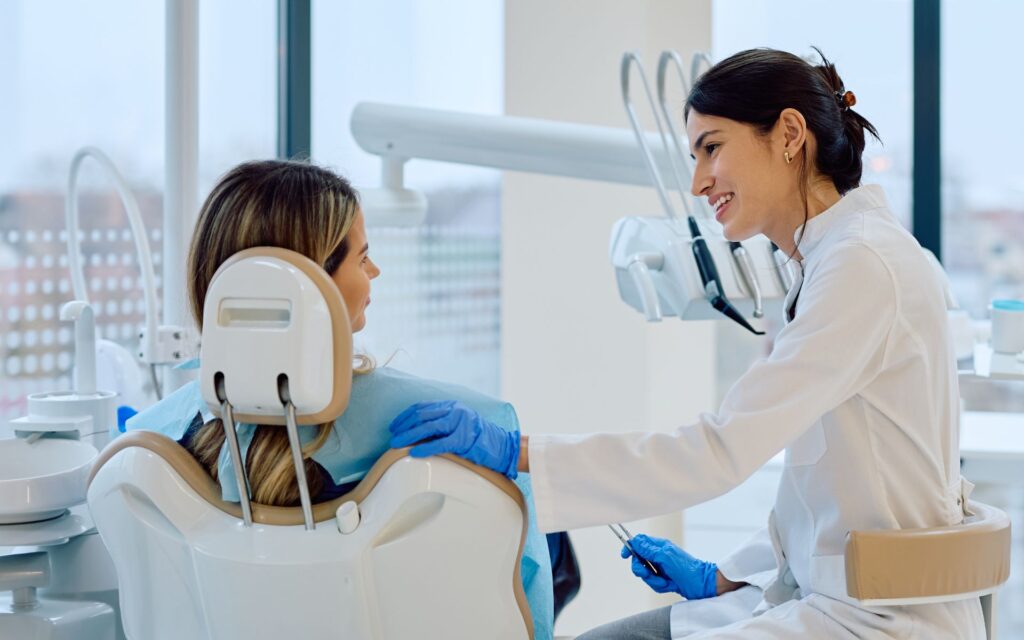
Long and complex dental treatments
Even normally calm patients can find themselves facing situations that would test anyone:
- implantology
- oral surgery
- full rehabilitations
- particularly long sessions
In these cases, anxiolysis in dentistry helps manage time and mental fatigue, maintaining constant cooperation from start to finish.
The benefits of anxiolysis for patients and dentists
Reducing anxiety is not an optional detail. It concretely changes the quality of care.
For the patient, it translates into:
- more controlled pain perception: stress amplifies discomfort, while relaxation reduces it
- greater physical comfort: less muscle tension and less fatigue
- overall, a more linear and predictable experience
There is also a relevant clinical aspect: anxiolysis helps keep blood pressure and heart rate more stable, an important advantage especially for more sensitive patients.
For the dentist, this means
- better operative access
- greater precision during procedures
- reduction of involuntary movements
In summary, it is not an “extra,” but a tool that improves treatment effectiveness.
Resta in Italia: face your dental treatments without anxiety
At Resta in Italia centers, anxiolysis in dentistry is evaluated case by case, starting from a simple premise: there is no single way to approach treatment.
Some people only need a more guided context, some benefit from light pharmacological support, while others require more structured protocols. The difference lies in calibrating the level of intervention, without forcing anything.
In this way, we make care accessible even for those who have procrastinated until now.
Do you want to get back to taking care of your smile without anxiety being an obstacle?